Farine

Crazy for Bread

  • Home
  • About
    • FAQ
  • Recipes
  • Resources
    • BreadCrumbs
    • Other Bread Sites
    • The Grain Gathering
  • Artisans

Search Results for: how to make bread

Sourdough granola bars

…or should I say “Granola Bars à la Susan“? Because it is on Susan’s blog, Wild Yeast, that I got the awesome, fantastic, super clever idea of using leftover 100% hydration levain to make granola bars! It simply had never occurred to me before. Here is Susan’s original post.

Like her and like most bakers I know, I just hate pouring starter down the drain (or in the compost bin). It smells yummy, it’s all set to get to work rising amber waves of crusty bread, so why, oh! why must I throw it out?

But of course I understand that if I kept feeding it the amounts of flour and water it needs to continue to thrive, I would soon have enough levain to fill a swimming pool and then where would I be? So yes, I do throw some out more often than not but when I happen upon a great way to do otherwise, I just jump on it, and yesterday morning when I read Susan’s post (it dates back to the end of May but I was traveling then and it had escaped my attention), I quickly took stock of what I had on hand and went to work.

Since I didn’t have all of the ingredients that Susan used, I substituted a few things: almond butter instead of peanut butter, maple syrup instead of honey, dried blueberries instead of golden raisins, dried apricot instead of dried cranberries and almonds instead of walnuts. I put in ginger as suggested in one of the comments to her post but, mindful of the calories, I used a bit less less pumpkin seeds and I halved the amount of sweetener. However, keeping in mind that my family has more of a sweet tooth than I do, I put some brown sugar on top to even things out a bit. Also, since Susan found her bars a bit too thin, I used more levain than she did and I baked mine in a biscotti pan.

Ingredients

285 g 100% hydration levain (sourdough starter)
100 g smooth unsalted almond butter
100 g rolled oats
75 g dried blueberries
75 g dried apricots, chopped
50 g maple syrup
50 g pumpkin seeds
50 g almonds, coarsely chopped
50 g pecans, coarsely chopped
15 g candied ginger, finely chopped (this could easily be doubled as the taste of ginger was rather faint)
6 g salt
brown sugar to taste (as a topping)
Method
I followed Susan’s instructions except that I toasted the pumpkin seeds, pecans and almonds at 350° F in the oven prior to chopping them and that I baked the mixture for 30 minutes instead of 20 since it was thicker.

Share this:

  • Share on Facebook (Opens in new window) Facebook
  • Share on Pinterest (Opens in new window) Pinterest
  • Share on X (Opens in new window) X
  • Email a link to a friend (Opens in new window) Email
  • Print (Opens in new window) Print

July 1, 2011 · Filed Under: Breakfast, Cookies & Crackers, Recipes · 7 Comments

Back home…for now!

Back home after a long visit overseas and itching to finally get back to baking after a 6-month hiatus, I took out the levain nuggets I had made in the fall to jumpstart the rebirth of my starter. (To make these nuggets, I cut up my 60% hydration starter in small pieces, let them air dry until completely dessicated and then store them in an airtight container). The whole process is normally a no-brainer: I cover two or three nuggets with water, let them sit for a while, add flour, mix and let rest, feed again, etc., until the thing come back to life. It usually takes between 36 and 48 hours.

Well, this time, it didn’t go as planned. The first batch of nuggets (luckily I had made three) had become infested with tiny black insects. All the bugs were dead (I guess levain bacteria are not what these beasties are supposed to snack on) but the nuggets were history.
As to the second batch, it didn’t even have a chance to show its mettle. Since the house was pretty cold (I know, everybody is sweltering across America but I assure you, in the Northwest, we have natural air-conditioning and my house is nowhere close to overheating). So anyway it was barely 60°F in the kitchen and since I am now the proud owner of a warming drawer (something I had never seen or used before), I figured I would set the warmer at the lowest temperature and put the levain inside. I guess I should have read the manual before I entrusted my baby to this thing as it does get awfully hot, much more than I thought! To make a long story short when I checked on the levain an hour later, it was resting placidly where I had left it and when I opened the lid, it exhaled a doughy sigh that bore no trace of the wild aromas I am so crazy about!
Out came the last surviving nuggets. Needless to say, I was extremely careful with them. I treated them to a steady diet of high-extraction wheat flour and freshly milled rye and after 24 hours of what I assume was deep reflection on their part, they finally came back to life. When they woke up, they showed such vigor that within 48 hours, I was able able to bake, which was good since we have family coming to visit next week and I needed to replenish the freezer…
While all this was going on I was so frustrated that I decided to go back to an old workhorse, Jim Lahey’s no-knead bread of New York Times and Internet fame, and give it another try, except that this time I used the same proportion of whole grain (a mixture of wheat, spelt and rye) as in my staple dough (the one I use for the rustic batard). This dough has a depth-of-flavor which we have grown addicted to and I wanted to see for myself how much was due to the freshly milled grains and how much to the levain.

Well, now I know. The yeast-based miche (made with a dough that had fermented 24 hours after the initial mix) turned out just fine but the aromas were muted, barely perceptible. Nothing like the fragrant music we have grown accustomed to. I am not bashing yeasted dough: I love tasty baguettes and other prefermented breads way too much for that. I am just saying that this 24-hour bread came in very handy (it made great breakfast toasts) but that it wasn’t the same, which means that I will happily remain on levain duty for the foreseeable future.

Share this:

  • Share on Facebook (Opens in new window) Facebook
  • Share on Pinterest (Opens in new window) Pinterest
  • Share on X (Opens in new window) X
  • Email a link to a friend (Opens in new window) Email
  • Print (Opens in new window) Print

June 15, 2011 · Filed Under: Misc. writing · 11 Comments

Buckwheat Crackers

Finally (almost) back! We have been without a home to really call our own for the past six months. We spent most of that time at our youngest son’s house. We are immensely grateful to him and his wife for putting up with us while renovation work was going on in our new house. It made it possible to close the door and leave the mess behind at the end of each day, which was a great comfort as the amount of things that needed to be done was overwhelming at times, especially when the Man started painting against the clock so that the furniture could go against the walls and unpacking could begin. He said he never imagined retirement could be so exhausting.
To make a long story short, it’s not over yet but the house is slowly turning into a home, so much so that we finally moved in last week and I was able to start baking again. For lack of time I didn’t get to experiment with any new formula (that will come later when we come back from visiting the Man’s parents in Belgium) but I was able to make a couple of batches of our staple bread, the Rustic Batard, and it was just heavenly to breathe in again the fragrance of baking bread.
I also made some whole grain crackers and before flying out to Europe (and putting Farine on hold again for a few weeks), I thought I would report on these as they are wholesome and quite easy to make. I used my new Kitchen Aid (my very first ever) and its pasta attachment to roll out the dough (what fun to create these long ribbons) but it can be done by hand with a rolling pin. Martha Rose Shulman recently wrote an article on whole grain cracker recipes for the New York Times. I tried the olive oil ones (some with grated Parmiggiano, some with za’atar, some with nigella seeds and some with sumac). They were quite good (although they could have used more salt) but our favorites were the Buckwheat Crackers. Lacking sesame seeds, I used chia seeds which I had on hand.

To Farine‘s readers who are familiar with the “galettes au sarrasin” (savory buckwheat crepes) made in Brittany and found in crêperies (crêpe restaurants) throughout France, I will tell this: if you try these crackers, you are in for a lovely Proustian moment…
I used buckwheat flour (bought in bulk already milled) and hard red winter wheat (which I milled just before mixing the dough). I didn’t use any all-purpose flour. The crackers came out crunchy but tender.

Share this:

  • Share on Facebook (Opens in new window) Facebook
  • Share on Pinterest (Opens in new window) Pinterest
  • Share on X (Opens in new window) X
  • Email a link to a friend (Opens in new window) Email
  • Print (Opens in new window) Print

May 16, 2011 · Filed Under: Cookies & Crackers, Recipes · 5 Comments

The Wonders of Brioche: Leslie Mackie’s Kugelhopf

Leslie Mackie Kugelhopf - P1060966
The Wonders of Brioche is the title of the BBGA-sponsored class I recently took at Macrina Bakery in Seattle, Washington. It was taught by Leslie Mackie, founder of the bakery and author of the popular Macrina Bakery & Café Cookbook.
Before I took the class, I thought of a brioche as a soft and buttery little bread with a funny hat like the ones I grew up seeing in every Parisian bakery and that pretty much summed up all I knew or wished to know on the subject. Butter and sugar are two ingredients I try to avoid in my baking, mostly for health reasons, so I never gave brioche much thought.
But the class flyer described brioche as “one of the most versatile doughs”, one which could be used to make roasted vegetables savory bread pudding, sandwich bialys and kugelhopfs, to name a few possibilities, and that new take on an age-old dough piqued my interest. Plus I had wanted to meet Leslie and discover Macrina ever since Bon Appétit ranked it among the 10 best bakeries in the US. More importantly still, I couldn’t pass up a BBGA baking event in my own backyard (we are in the process of moving to the Seattle area). So I took the class.
I didn’t regret it. Not only is Leslie a skilled and gracious instructor but I met passionate bread people from all over: Debbie who recently opened a bakery in North Carolina with her two daughters; Tom, a retired computer consultant who moved to the West Coast of Mexico after 30 years in New York and plans to open a little bakery there; Nieva who would like to retire one day to her native Philippines and open her own bakery in her hometown; Bob, a serious homebaker who built himself a wood-fire oven on his patio on nearby Bainbridge Island; Diane, a community developer who lives on a farm near Victoria, B.C., raises goats, makes her own cheese and bakes up a storm every week; Marina, an inspired young head baker from Minnesota who is looking to expand her product line; Julie, who lives in Southern Washington and with whom I took a weekend tart baking class at SFBI last year, among many others.
We made two doughs, one sweet and one savory or rather, Leslie demoed the mixing of the savory dough and we mixed the other one. I was surprised to see her add sugar to the savory dough (which we were going to use to make bialys and bread pudding). When I asked her about it, she said it just wouldn’t be brioche without it, so while she reduced the amount of sugar, she still put some in.
I then asked about possibly reducing the amount of butter or substituting some wholegrain flour for a percentage of the white flour and got the same answer. It just wouldn’t be brioche. See? There is no Santa Claus after all… But Leslie encouraged me to go ahead and try anyway and see if what I like what I get. Maybe I would find the trade-off worthwhile. So sooner or later I will indeed give it a shot.
Leslie’s baking style reflects her lifelong interest in flavor-building, a devotion she attributes partly to her mom whose idea of spring break was to take her daughters to San Francisco (the family lived in Portland, Oregon) on whirlwind gourmet-eating expeditions.
After graduating from the California Culinary Academy, Leslie lived in Los Angeles at the time when Nancy Silverton was experimenting with bread. As she puts it, “it lit a fire.” She went to baking school in France at Aurillac, toured artisan bakeries in Italy where she ate her way through more than a hundred loaves, soaking up traditional flavors and techniques, and by the time she was done, the fire had taken hold of her for good. She came back resolved to open her own bakery one day. She trained for a month in Seattle with Tomas Solis at Grand Central Bakery where she was then hired as a head baker and where she worked for four years before finally realizing her dream. Everything else she knows, she says she learned through trial and error and through her association with BBGA.
A firm believer in the value of the intuitive process, she loves to experiment and now that she has brought in partners into the business she started 17 years ago, she can spend most of her days thinking up new recipes or experimenting with innovative takes on older ones.

Her bialys for instance look and taste like no other bialys I had ever seen or eaten. They are airy and soft and make a terrific sandwich (although I could do without the slightly sweet taste): watching Leslie build a fried egg sandwich on an onion-poppyseed bialy is a treat in itself. No wonder her customers descend upon these breakfast sandwiches like locusts upon a field of tender shoots: she orchestrates the flavors like a maestra.

But of all the things we made during the class, the kugelhopf was my favorite. Now I am not an expert on kugelhopf and I am sure excellent ones are to be found elsewhere. But to be frank, on a scale of 1 to 10, I am usually sorely tempted to give a score of 3 or 4 to the ones offered for sale in French bakeries, particularly in the Alsace where they lurk in every shopwindow. They are all too often dry with a sandy crumb. Before I took the class, the only attraction they held for me was the beautiful molds they are traditionally baked in.
However Leslie doesn’t bake her kugelhopf in a traditional mold. She uses a Bundt pan. Also, she doesn’t just put the dough in the pan. She first laminates it with extra butter, then she rolls it up in a tube, somehow attaches the two ends together to form a ring and transfers the whole thing to the pan where it is allowed to rise seam-side up in a voluptuous pillowy circle.
Her kugelhopfs are light and delicious. They taste like no other kugelhopf I have ever had but hey, that’s the whole point… They are fantastic. Because of their high butter/high sugar content, they won’t become a staple in our house but I suspect they’ll appear on our holiday tables from now on. They are just too good to pass up…
Leslie doesn’t use baker percentages and she doesn’t do grams (her book uses cups and tablespoons, probably because it mostly targets homebakers). At the bakery she works with pounds and fractions of pounds. But she took pity on us and gave us the formula for her brioche dough.

Macrina Sweet Brioche Dough
(please note that this dough is best mixed in a mixer)
All-purpose flour, unbleached 100 %
Milk, at room temperature 51.85 %
Eggs 22.22 %
Sugar 13.85 %
Butter, at room temperature 22.22 %
Salt 1.41 %
Instant Yeast 0.67 %
Vanilla Extract 2.59 %
Total 214.81 %

Method
  1. Mix milk and yeast and let rest a few minutes
  2. Pour flour, salt, vanilla and eggs in mixer
  3. Mix 4 to 5 minutes on 1st speed, adding butter in small pieces while the mixer is running and after flour and milk have been incorporated
  4. Switch to 3rd speed and mix for 5 minutes, gently shaking in the sugar
  5. Continue mixing another 5 minutes on 3rd speed (desired dough temperature after mixing: 78°F/26°C)
  6. Transfer to covered oiled container and set aside for 2 hours (fermentation)
Ingredients (for 3 kugelhopfs)
Filling
  • 500 g brown sugar
  • 170 g chopped walnuts
  • 10 g cinnamon
  • 10 g cocoa powder
  • 140 g unsalted butter, melted
  • 10 g vanilla
Dough
  • 1.88 kg sweet brioche dough
  • 330 g unsalted butter
Method

  1. Mix all ingredients together, set aside
  2. Flatten/degass the dough
  3. Spread the softened butter over 2/3 of the dough
  4. Do a triple fold and roll out the dough
  5. Let is rest for 30 minutes, covered with plastic in a walk-in cooler or in the refrigerator
  6. Roll out the dough to 1/2 inch-thick, spread filling over the dough
  7. Roll up like a cinnamon roll. Divide into 3 equal pieces
  8. Place in buttered bundt pan baking molds, seam-side up
  9. Let proof at room temperature for 1 hour, then put in the walk-in or in the refrigerator overnight
  10. The day after, bring out to room temperature for 2-3 hours or until nicely proofed.
  11. Preheat oven at 300°F/150°C for one hour
  12. Let cool. Invert and brush with butter
  13. Sprinkle with powdered sugar.
Be sinful and enjoy!
Macrina’s Kugelhopf goes to goes to Susan’s goes to Susan’s Wild Yeast Blog for this week’s issue of Yeastspotting.

Share this:

  • Share on Facebook (Opens in new window) Facebook
  • Share on Pinterest (Opens in new window) Pinterest
  • Share on X (Opens in new window) X
  • Email a link to a friend (Opens in new window) Email
  • Print (Opens in new window) Print

February 11, 2011 · Filed Under: Breads, Holiday breads, Recipes, Yeasted breads · 16 Comments

Meet the Baker: Noah Elbers

Related post: Noah Elbers’ Maple-Oatmeal Bread
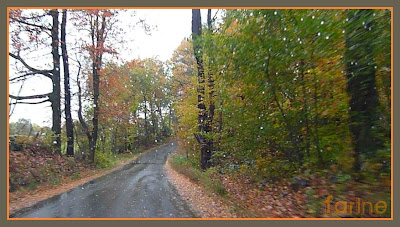
As we were driving home after a visit to Noah’s bakery in New Hampshire, I was thinking that if I could have another life and start all over again and be a professional baker, then I would want to start my career at Orchard Hill Breadworks. Not only is it located deep in the woods of New Hampshire which are gorgeous year-round and especially in the fall when we were there (sorry I can’t show you more pictures than the ones I took from the car as it rained all the time we were there)…

…but I have never seen such a jolly team of bakers as Noah and his employees. Kurt, one of the full-time workers, was away on a trip but I met the two other permanent members of the team…

…Dave Cody (who used to work with kids with behavorial problems)…

…and Brendan Smith (who started as a home baker when he was working in a consulting firm specializing in renewable energy)…

…as well as Ben Ewing who was replacing Kurt on a temporary basis and who, by trade, is a forester. All three love biking (as does Noah) and I have the feeling that they have no problem finding something to talk about as they work. Dave and Brendan live a mile away on the same road as the bakery. They bike to work most of the time. Every house along the road has a wood stove and they say the air smells delicious as they ride by. They clearly love it here and Noah enjoys the interaction with his employees. A small detail (which I found it endearing): Noah’s family has a flock of 50 laying hens and whenever these hens lay, his bakers get free eggs. Now that has nothing to do with baking but it certainly fosters a feeling of belonging…

I am always amazed at and delighted with the diversity of the paths which lead to bread. Noah himself started baking as a teenager when a next-door neighbor built a wood-fire clay oven and recruited him to help make bread. He loved the essential nature of the elements involved, fire and earth, especially in the winter. He enjoyed seeing the dough rise in baskets. He also loved the bread which was excellent. But he didn’t see baking as a career. By the time he graduated high school he had pretty much ruled out college and decided to stay home and help his Dad run his farm (he has an apple orchard). The baking neighbor no longer lived next door. They had remained friends however and one day he convinced Noah that he needed to build his own outdoor oven, so that he could bake breads on weekends. The rest is history (or rather a story told here on the bakery’s website).

Dave, Brendan and Ben – soon joined by Noah – were shaping the 6-grain bread when I showed up in early morning. As can be seen from the video below, the bakery is a regular beehive:

Noah says he has no illusion about being a master baker. Bread isn’t a religion for him and he doesn’t live through bread. He likes the idea of leaving space within himself for other interests and hasn’t devoted attention to developing a signature bread nearly as much as to trying to make a living for himself, his wife and his two kids. He describes himself as the type of baker who has given a lot of thought to the bread-baking process, tried his best to learn and observe as he went along (he never went for formal training and at the beginning mostly learned from books such as The Bread Builders by Alan Scott as well as from skilled friends) and ends many a shift with a puzzled look on his face. He finds that the complexities of baking are at times well explained by science and at other times simply unexplainable. But he goes with what works for him and obviously cares deeply about the quality of his products.
Most of Noah’s breads are naturally leavened except for a couple of sweet breads which benefit from an addition of poolish. He maintains a liquid levain (at 90% hydration) which is fed every 12 hours with a mix of 90% all-purpose flour and 10% freshly cracked rye (he finds that rye adds complexity and takes away some of the more acidic flavors). He uses an old refurbished mixer which is gentle on the dough.
The piece of equipment Noah takes the most delight in is however his oven. Having baked for years, first in an outdoor clay oven (despite the rustic appeal, he certainly doesn’t wax nostalgic about the days he had to carry trays of proofed loaves outside in all kinds of weather) then in an Alan Scott brick oven (it could only hold 30 to 40 loaves at a time, and no more than 500 loaves in a day’s bake which would take 14 hours to complete), he clearly enjoys his gorgeous Llopis revolving brick oven: it allows him to bake more than 900 loaves in little more than 8 hours.

There are three bake cycles per week (from preferment mixing to bread delivery), each one producing on average 1,000 lbs of dough (total dough production will reach 155,000 lbs this year). Noah is committed to making weekly not only a 100% whole-wheat loaf but also another whole-grain one which changes regularly (rye, Russian rye, whole-spelt with rice, oats and millet, currant rye, etc.) At each bake he also makes a country campagne with 40% whole grain. Although he himself enjoys whole-grain breads, he acknowledges readily that they represent a very small percentage of the total production.
Now for those among you who are passionate bakers and love to delve into the specifics, here is a bit of technical information:
  • Noah doesn’t preshape, ever. He has done a lot of side by side comparison and failed to establish that it made a difference
  • All his doughs are pretty well hydrated but not superwet (at least 70% for most white doughs and closer to 85% for the whole-wheat), so that they relax quickly
  • Although most of the white flour he uses (hard red winter wheat) comes from Quebec’s La Milanaise, Noah mixes all his preferments with Kansas Heartland Mill flour which, in his experience, seems to have a better tolerance for long fermentation. He regularly uses a blend of 70% Milanaise and 30% Heartland.
  • For the whole wheat, he uses exclusively La Milanaise flour
  • He fires up the oven while mixing the bread (which means that the oven isn’t fired every day). When baking, by the time the oven floor is completely loaded with bread, the first loaves are finished and fresh loaves are immediately put in their place. The oven is never less than 80% full.
  • The ceiling of the oven is much higher than in most deck ovens. Due to the high volume of very humid air (coming from the baking loaves), there is no need to add steam
  • Noah uses poolish (together with levain) to give the dough an extra boost whenever it contains a lot of sweetener or milk
Noah also makes specialty breads: one of the most popular is cracked pepper & parmesan but I never made it up to the bakery on a day when this bread is on. So I can’t say how it tastes. But the first time I visited the bakery, Noah had just made maple-oat bread. I bought a couple of loaves and brought them back home. It was love at first bite!
The bread is so good that I decided on the spot that I had to interview Noah for Farine and beg him for the formula. He kindly acceded to both requests and I now have the great pleasure of introducing a marvelous specialty bread: Noah Elbers’ Maple-Oatmeal Bread.

Share this:

  • Share on Facebook (Opens in new window) Facebook
  • Share on Pinterest (Opens in new window) Pinterest
  • Share on X (Opens in new window) X
  • Email a link to a friend (Opens in new window) Email
  • Print (Opens in new window) Print

January 5, 2011 · Filed Under: Artisans, Videos · 3 Comments

  • « Previous Page
  • 1
  • …
  • 40
  • 41
  • 42
  • 43
  • 44
  • …
  • 55
  • Next Page »

Hello!

MC-Profile- 2013 - DSC_0934

My name is MC: formerly a translator,  now a serious home baker and a blogger. If you like real bread and love to meet other bakers, you are in the right place. Come on in...

Learn more →

  • Email
  • Facebook
  • Instagram
  • Pinterest
  • RSS
  • Twitter

Don’t want to miss a post?

Subscribe to Farine via email

Archives

Categories

Copyright © 2026 Farine · Design by Design Chicky Log in